
Specialist area · children and adults

Occupational therapy for people who are blind or have low vision

Vision impairment changes how a child learns, plays and moves, and how an adult reads, cooks, works and gets around. Occupational therapy that understands vision makes a practical difference. Ana led the Vision Education Service at the Royal Institute for Deaf and Blind Children (now NextSense), and OT Life is one of the few Sydney practices offering this expertise in the home, the classroom and the community.

Ask us a question

This enquiry is for *

Marina or Ana reply personally, usually within a couple of business days. No waiting list, no obligation.

What we help with

What we help with

  • Early development for babies and young children who are blind or have low vision: play, movement, hand skills and exploring the world
  • Alternative access to print and information: large print, braille readiness, magnification, screen readers and tactile materials
  • Daily living skills taught in ways that do not depend on sight: dressing, eating, cooking, personal care, organisation
  • Classroom access: materials, lighting, seating, equipment and strategies set up with teachers and support staff
  • Visual efficiency and functional vision: making the most of the vision a person has
  • Cortical (cerebral) visual impairment and vision impairment alongside other disability
  • Technology: devices and apps for reading, writing, navigation and independence, chosen and set up for the person
  • Home set-up and safety: lighting, contrast, organisation and modifications
  • Assessments and reports for the NDIS, schools and specialist services
  • No waiting list
  • NDIS provider
  • We come to you
  • AHPRA-registered

For families

When a child is diagnosed with a vision impairment, families are often handed a lot of information and very little practical help. We start with what your child can do, show you how they are using their vision and other senses, and build routines, play and learning around that. We work alongside your ophthalmologist, orthoptist, orientation and mobility specialist and early intervention team, and we help your child’s preschool or school make the classroom work.

For adults

Whether vision loss is lifelong, recent or progressive, the goal is the same: to keep doing the things that matter, safely and on your own terms. That might mean a kitchen reorganised by touch, a phone set up to read aloud, lighting and contrast changes at home, or new ways to manage medication, money and mail. We also prepare the assessments that fund equipment and support through the NDIS.
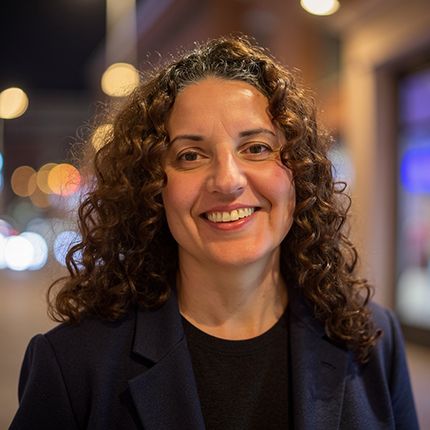
Ana Radis, occupational therapist and co-founder of OT Life, smiling
Who leads this work

Ana Radis

Occupational therapist and co-founder

Ana served as Coordinator of the Vision Education Service at the Royal Institute for Deaf and Blind Children (now NextSense), where she managed the program and provided clinical supervision to other occupational therapists. Few OTs in Sydney bring that depth of experience with children and adults who are blind, have low vision or are Deaf or hard of hearing.

“My approach is centred on creating tailored solutions that enhance accessibility and foster development.”

More about Ana
Good to know

Before you get in touch

Specialist experience

Ana coordinated the Vision Education Service at RIDBC (now NextSense), supervising other OTs and training professionals and families across the sector.

Works with your other services

We complement, rather than replace, orientation and mobility training, low-vision clinics and specialist schools, and we liaise with them so advice is consistent.

Accessible from the start

Reports, plans and resources are provided in the format you need: large print, accessible electronic documents or audio. Tell us what works for you.

Where sessions happen

We come to you

  • At home

    Where routines actually happen: mornings, meals, play, homework and bedtime. Most families start here.

  • Preschool and school

    Alongside educators, so the strategies that work in a session work in the classroom and the playground too.

  • In the community

    Shops, parks, the bus, a workplace or a group home: wherever the goal is, that is where we practise it.

  • By telehealth

    Secure video sessions for families and adults anywhere in NSW, and for check-ins between visits.

Questions

Blind and low vision: questions people ask

What does an occupational therapist do for someone with vision impairment?
We focus on the practical skills of daily life and learning: how to do things without relying on sight, how to use the vision a person has as well as possible, and how to set up the environment, materials and technology so that tasks are achievable. For children that includes development, play and school; for adults, independence at home, at work and in the community.
Do you work with children who have cortical visual impairment?
Yes. Cerebral or cortical visual impairment (CVI) is now one of the most common causes of vision impairment in children, and it needs a different approach from ocular conditions. We assess how a child uses their vision in real situations and adapt materials, routines and the environment accordingly.
Can you help choose and set up assistive technology for vision?
Yes. From magnifiers and large-print or high-contrast materials to screen readers, braille displays, smartphone accessibility features and navigation apps. We assess, trial, recommend and then teach the person and their family or support workers to use it, and we write the NDIS assistive technology reports.
Is this funded by the NDIS?
Usually, yes. Vision impairment is a common basis for NDIS access, and occupational therapy, assistive technology and home modifications are funded under Capacity Building and Capital supports. We can help you understand what to ask for.
Do you provide orientation and mobility training?
Orientation and mobility (long cane, route travel) is a separate specialist service. We work alongside O&M specialists and focus on daily living, learning, access to information and the home environment.
Also
All 6 services
No waiting list

Talk to us about blind and low vision

Tell us a little about who the support is for and what is hard right now. Marina or Ana will be in touch, usually within a couple of business days, and there is no waiting list.